Friday, 15 July 2016

Day 15, The problem with plastic outside the home


Notice the bin liner?
In the controlled environment of one’s home it is relatively easy to manage plastic consumption but when out and about, especially with children, it can be near impossible.

Gia got herself worked in to a medium-sized, dehydration-fuelled, emotional meltdown after kindy this afternoon. The best cure is calmness on my part, a gentle hug if she’ll take it, and a Slurpee on the ride home (or water if it happens before we leave kindy). Now this will only mean something to those Slurpee aficionados amongst you: the fine texture and coldness of the Slurpee mush was top quality, so I poured one for me too; Gia does not like to share. Two plastic straws - BAM!

I have an idea of compiling scenes from old movies that show examples of how our parents and grandparents used to live without plastic, in ways that we can apply today. For example, in Breakfast at Tiffany’s, there’s a scene in which Audrey Hepburn is in her kitchen talking to her cat and incidentally we see her line her rubbish bin with paper, I remember my mum doing this.

If you have seen an example from the movies and can recall where, please share with me. I’ll upload a video compilation at a later date.

Tuesday, 12 July 2016

Day 12, Stoopid plastic!


Ban plastic tampon applicators

Is all plastic bad?

I'd say: there is dumb plastic and there is smart plastic. Tampon applicators, garden furniture, disposable drink bottles, plastic wrap on fresh supermarket produce, those white plastic tubes that the police use once during an alcohol breath test, disposable plastic spoons used as coffee stirrers... are all stupid uses of plastic and we should stop immediately.

However, artificial hearts, hip joints, blister packs for medications, many electrical and building products, in fact there's a tonne of items that the plastic revolution has made possible and are way too fantastic to either do without ... Lego, you get my point here, are all great applications for plastic.

What I'm advocating here is simply to see this amazing and durable material for what it should be, essential, precious and ...rare.

Take this for example:
Fairfax//the-stupid-appliances-we-waste-money-on

Monday, 11 July 2016

Day 11, Return to Civillisation?

The view from our walk this morning - click to enlarge.
It's good to get away but it's confronting to encounter people who think radically different from you. I love my tribe, yes that's probably you folks.

The other day, I  wandered into a store on Gertrude Street and got into casual chit-chat with the girl behind the counter. When I saw a little display of funky shoe laces in plastic tubes, I remarked that I always thought an on-line shoe lace store would be a good thing - to keep those fancy runners with unique laces looking good. She then replied, "why wouldn't you just buy new shoes?" I had a bit of a brain melt at that. Had no idea where to start - I got outta there.

I have encounters like this in small ways and large, many times throughout my day, do you?

For a no-plastic campaign, it makes it easy to eat out, where someone else does the cooking and washing up and I expect they're buying in bulk too which means less packaging. May be a good strategy.

The weather was exceptionally crappy, though didn't really mind so much, so lovely to be down the coast. On the day of departure, the sun came out and a brilliant morning rainbow connected land and sea. The image above looks like album artwork for maybe the KLF.

I notice the amount of plastic I see in the environment, washed up on the beach, in a creek, and I wonder how it got there.

Sunday, 10 July 2016

Day 10, Tragedy of the commons


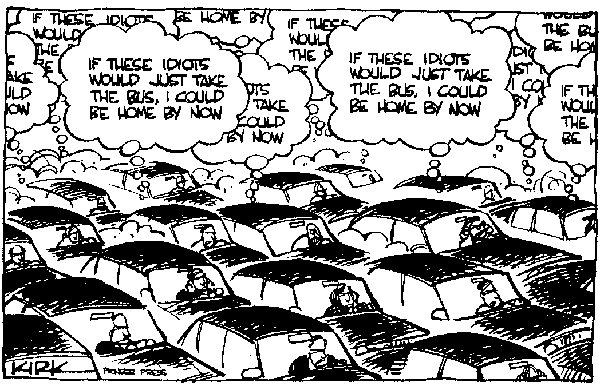
The tragedy of car culture

I first learned about the Tragedy of the Commons while traveling on a train between Copenhagen and Hamburg in 2009. I was returning from the now infamous UN Climate Conference, where I had been part of the media contingent. I was catching up with some of the literature I carefully selected to take away from the thousands of briefing papers that were available.

It describes the foundation principal of economics and ecology, whereby a common asset is degraded by those that share it, because no one person feels responsible for the overall impact of their contribution to its destruction.

Put simply: farmers sharing a paddock to graze their cattle each use it as much as they need: however, they end up destroying the pasture because no single farmer can see how their individual action affects what may otherwise have seemed like a 'very big paddock'.

Today, we can see how this applies to everything from dropping a lolly wrapper in the street to over-fishing the Earth's oceans and climate change. It's a matter of being able to see how individual action contributes to the whole.

I believe the environmental crisis we are facing today is a result of scale and perspective.
It's understandable, should involve no shame or blame but needs to be solved by strong governance.

If you want to find out more on this, go to Garrett Hardin's incredible article published in 1968, where he proposes the idea of the Tragedy of the Commons and covers topics including, nuclear war (a very hot topic at the time), population control, pollution and the role of conscience and mutual coercion. Essential reading for every human.

Earthrise, Wikipedia

Saturday, 9 July 2016

Day 9, Saturday - Off to the coast

I love Maria the milk lady, who in turn loves Mozzarella. We have a bit of a three way thing going on :/
Today, we're off to Apollo Bay, stopping off to pick up supplies at The Source, Babka and La Latteria.

I don't seem to be missing any of the goods that I used to buy in plastic: rice crackers are off the menu, along with all supermarket crackers, chips, bread, noodles, tofu, yoghurt, juice, fancy butter, cheese portions, meat, breakfast cereal, etc,etc. I now travel to various shops and take my own containers to refill.

What endures, however, is a happy contentment that my shopping choices are aligning with my values. In the past, I have always felt somewhat icky walking into a big supermarket to do a big shop, knowing that my choices are limited and that they exercise their market power to force suppliers to conform to their demands — milk prices anyone?

Have a look at this FB post I wrote a few weeks ago:

Friday, 8 July 2016

Day 8, End of week one


1 week of living plastic less
It's been a week since I started this experiment, here are my observations so far:

  • Living plastic-less creates an ongoing feedback loop within your household that once begun, makes it easier to continue. For example, buying in bulk means there is less delicate packaging and you get large storage jars to re-use. The packaging seems to be more basic too: cardboard, paper, fabric, glass.

  • Buying less processed foods means you buy more basic ingredients that can be combined into a wider variety of foods. Think flour, eggs, butter, sugar, oats, fruit & veg - to make pancakes, cupcakes, juice, soups, salads, bread, pizza, fresh pasta and so on.

  • Plastic consumption roughly equates to convenience, and by that I really mean 'instant gratification'. With just a little forethought this convenience benefit is almost zero.

  • The first 80% is super easy, the next 15% is hard, the last 5% is really hard (bordering on the obsessive).

  • Once the process is begun, it seems to take no effort at all.

  • It feels good.

Thursday, 7 July 2016

Day 7, Getting into the swing of things

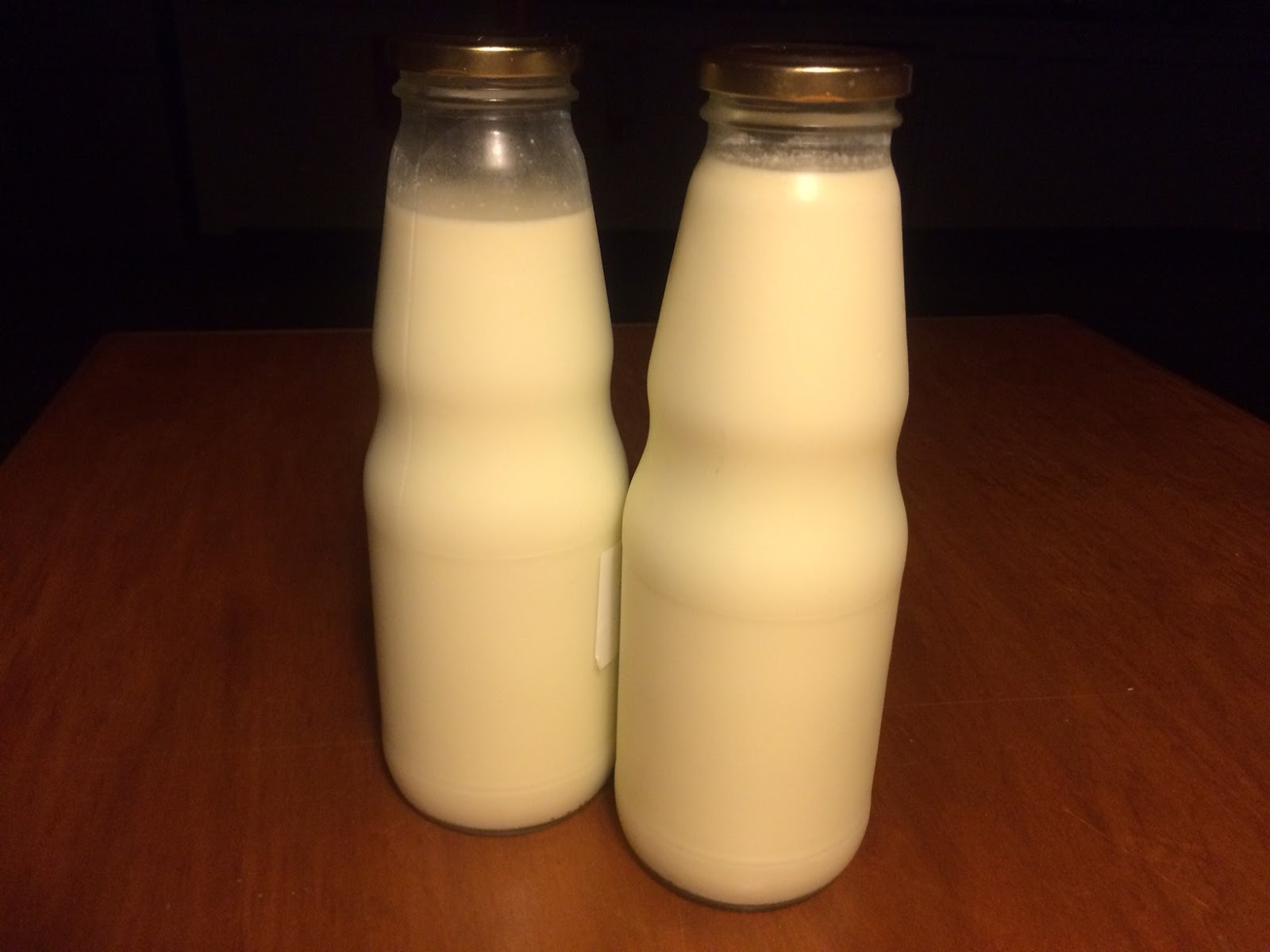
Milk Bottles are back in at La Latteria in Elgin St, Carlton
Maria, (may not be her real name) at La Latteria, now has milk bottles in stock and best of all she'll swap the empties when you purchase new ones. This is great, especially considering how much milk Gia and I go through.

My plastic consumption has shrunk to almost nothing and it doesn't feel like any effort at all.
(This feels like an ominous declaration.)